

March 4, 2026
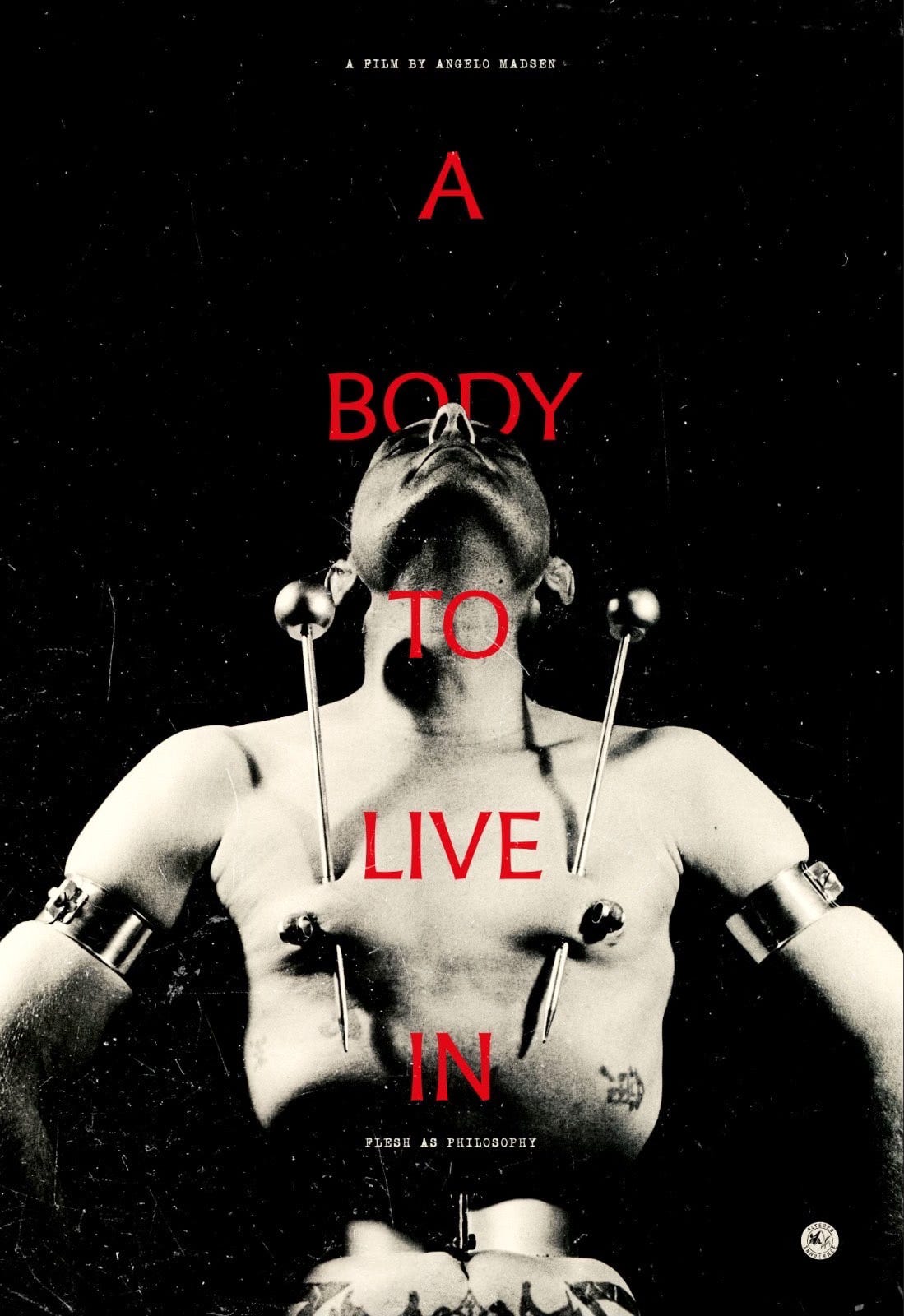
“My body, my choice” was taken to extremes many might find uncomfortable or downright shocking by Fakir Musafar, the man who is acknowledged as the spiritual father of the modern primitive cultural movement, which prefigured widespread acceptance of body modification and BDSM.
You may be familiar with Musafar from his shocking self-portraits of the ‘40s on, showing him with his waist impossibly cinched, or from his ‘70s performances in which he was publicly hung by nipple hooks, but A Body to Live In — a new film by Angelo Madsen — is the first documentary to explore the totality of his life, his work and his spiritual message, and it is so thorough it feels, at times, more like an MRI than a mere portrait.
Born Roland Loomis in South Dakota in 1930, he began to feel a deep, anthropological and spiritual connection to an envisioned existence outside our own by age 4. Via rare audio recordings made with him on talk shows and even on his deathbed, he articulately describes what motivated him to begin experimenting with his physical form — via drag, clothespins pinching his flesh, tattoos and piercings — by age 14.
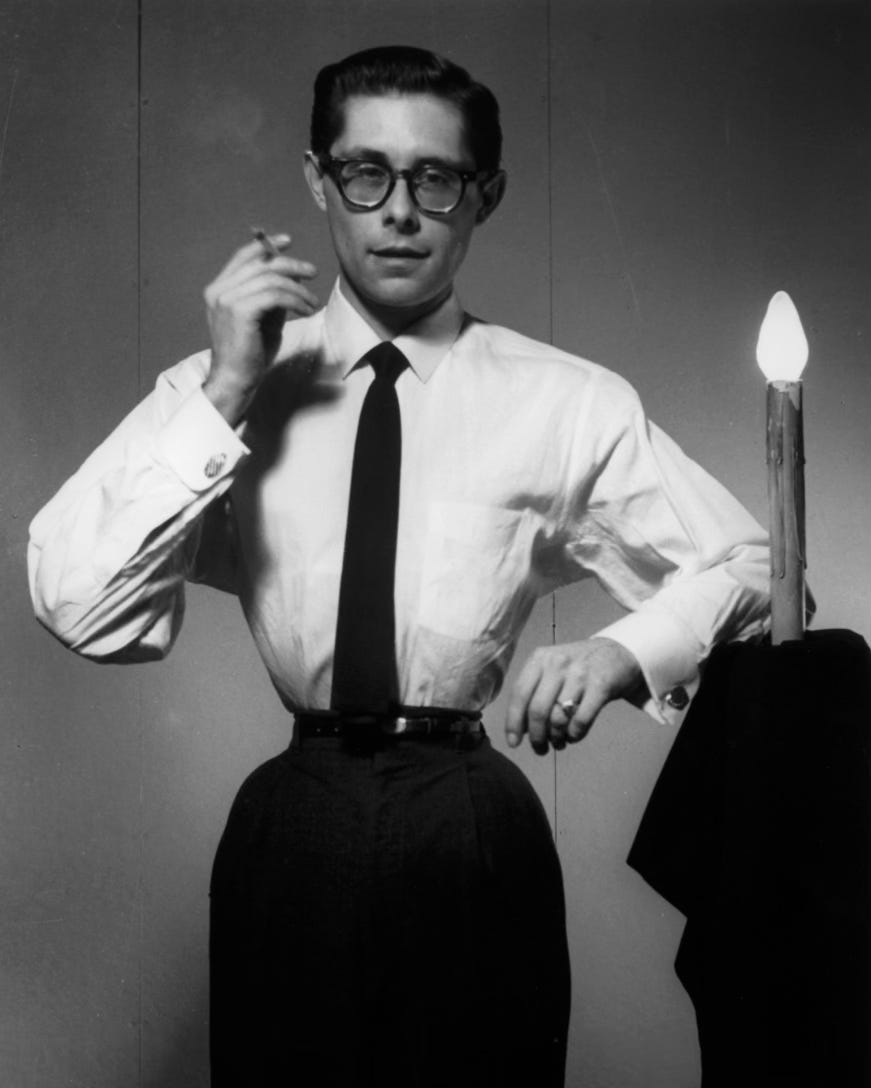
In one of the film’s most compelling sequences, the artist narrates how he spent a weekend alone when his parents were out of the house, involving stringing himself up in the family cellar and photographing the gruesome-looking endeavors, a remarkably confident and risky thing to do in an era when photographing his nude body could have resulted in obscenity charges.
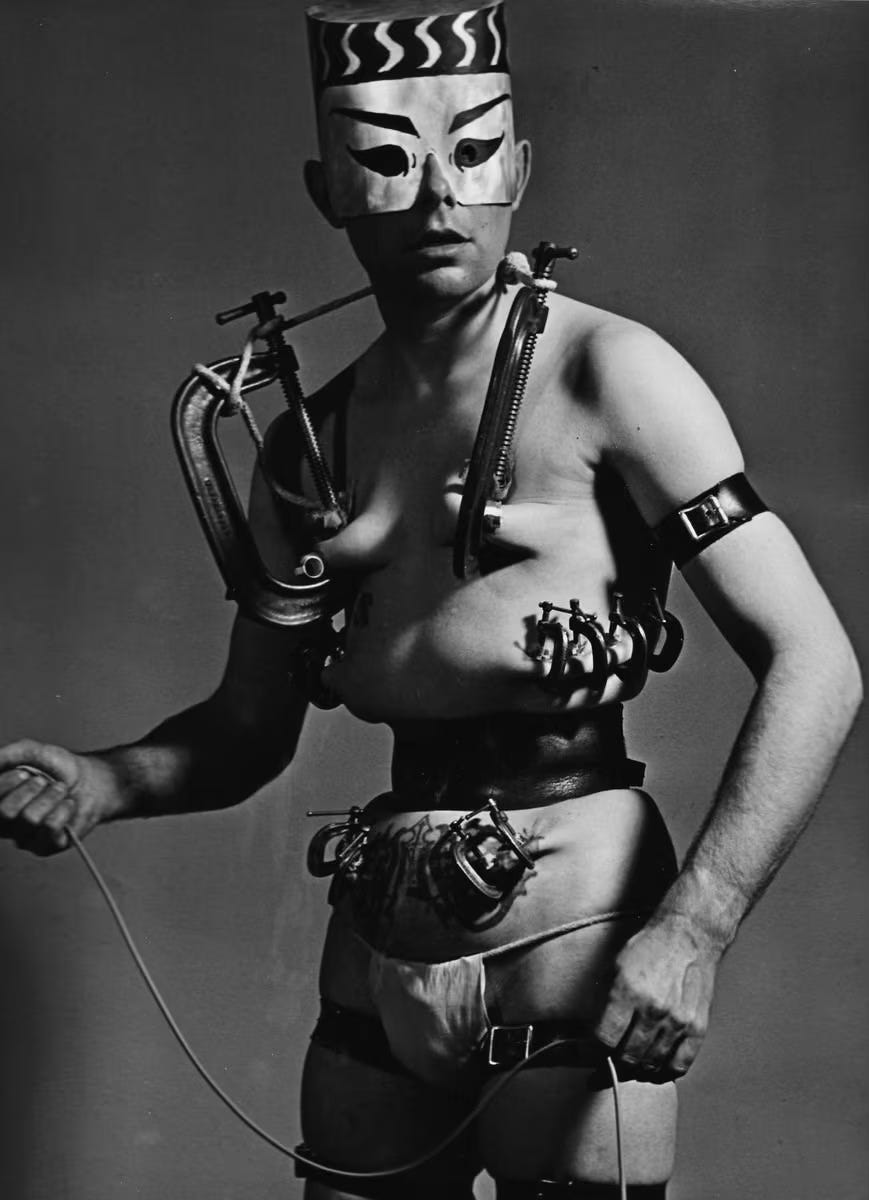
Driven by other cultures’ rituals, particularly Native Americans, and later rechristened Fakir Musafar, he grew into a double life, holding down a design job and passing as a normie while deeply involved in testing his body in his spare time — eventually seeking out others like him.
As we learn about Musafar’s story, it’s enhanced by fresh interviews with Annie Sprinkle, Ron Athey and other luminaries from the subculture, whose reminiscences of crossing paths with the subject reveal how deeply connected they all felt to him.
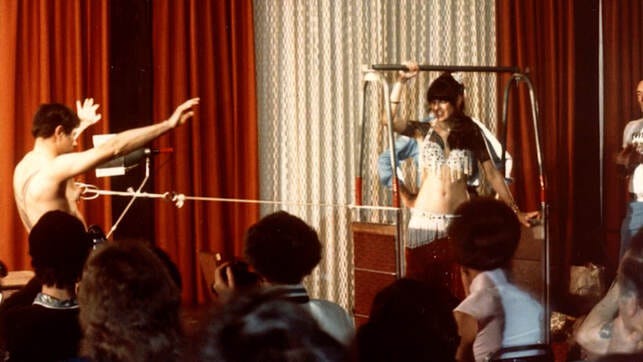
At one point in the film, an interview subject notes, “The ‘90s hasn’t happened yet,” an understatement when it comes to attempting to understand how much of an originator Musafar was. There wasn’t a piercing industry until he inspired it.
Yet, as much of a creative and cultural disruptor as he was — organically driven by what turned him on and by what made him feel connected to the universe — Musafar was later passionately criticized for cultural appropriation, with Native American groups condemning what they saw as an inappropriately sexualized interpretation of their traditions.
This criticism is hard to blow off, yet hard to fully embrace, as Musafar appeared to have been driven from a deep need, not an offensive, superficial kind of culture vulturism.
In his own words, Musafar once wrote:
“How about the deeper side of us that operates in the ‘invisible world’? How about the inner emotions, feelings, spirit and energy that animates the body?”
By the way, in case you’re wondering, though he had “a romance” with Sprinkle and married a woman, the likeminded Cléo Dubois, in 1990, he could be categorized as queer, describing his childhood as having been complicated by coming off as effeminate and later embracing the gay SM movement he helped invent and propel.
The film also touches on how dramatically the modern primitive movement — which traffics in intimacy — was decimated by AIDS, though it was lung cancer that robbed (or freed?) Musafar of his body in 2018.
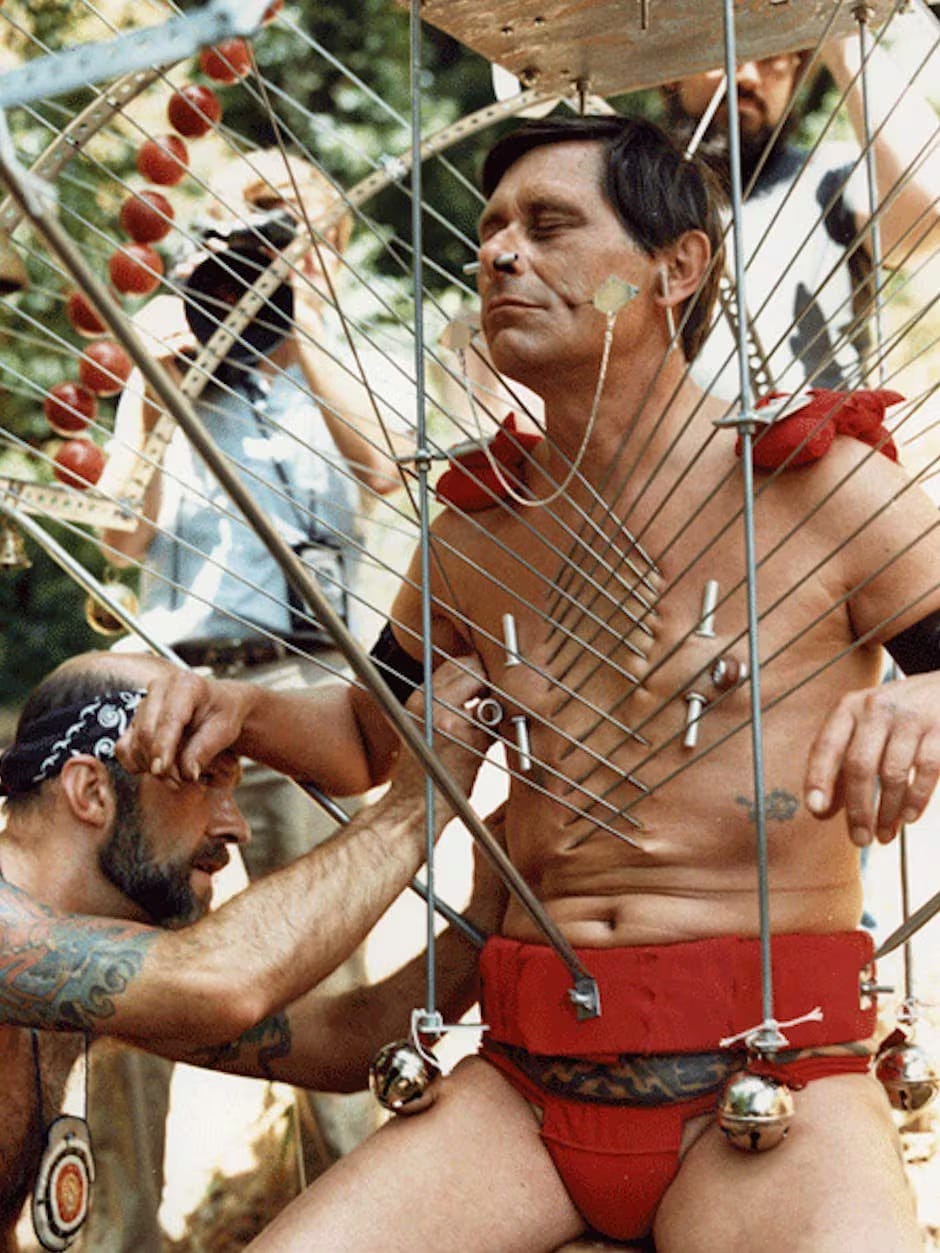
Madsen’s film is a loving portrait of a person so committed to the concept that our bodies are temporary vessels and so excited by the possibilities they offer that his unconventional ideas have spread like religion, contagion or good news, depending on how you view it.
If you have any interest at all in modern primitivism, A Body to Live In is calling your name. If not, it is still a bit of a religious experience, but you may find yourself reacting to it like a bored kid in church.