

April 9, 2026
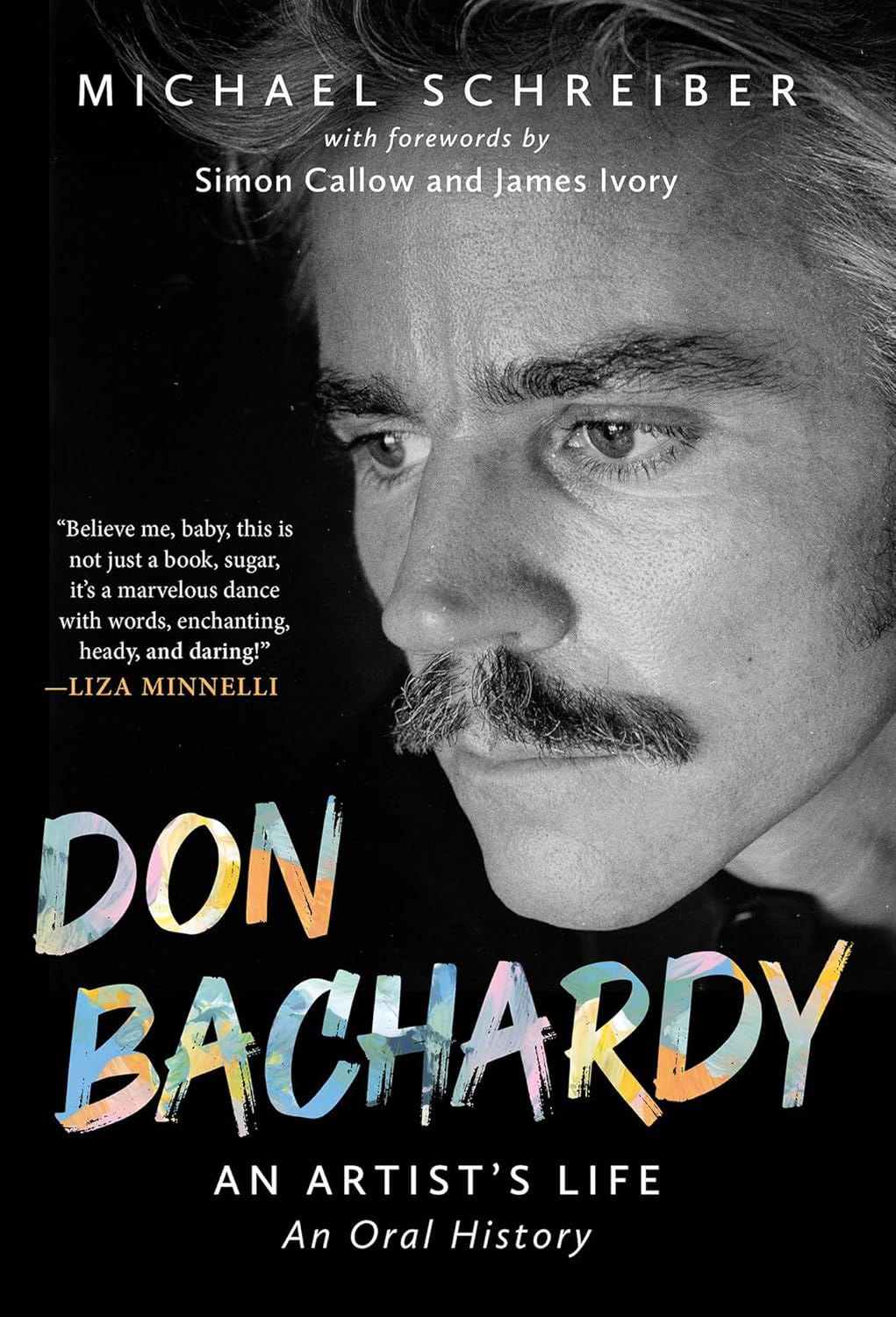
I’m a slow reader, but that’s no excuse for waiting so long to heartily recommend the engrossing book Don Bachardy: An Artist’s Life — An Oral History by Michael Schreiber (Citadel, $29).
Out since late last year, this indispensable work — just nominated for the Randy Shilts Award for Gay Nonfiction by the Publishing Triangle — is actually a joy to read, organized by lively, expertly edited (take it from me, you don’t just speak with someone and poop it out onto the page) interviews between Schreiber and his nonagenarian subject. It feels like you’re sitting in a room with Bachardy, and can almost hear him telling his tales.
Bachardy is a uniquely fascinating man, and is finally receiving a book that captures the totality of his persona and his artistic output.
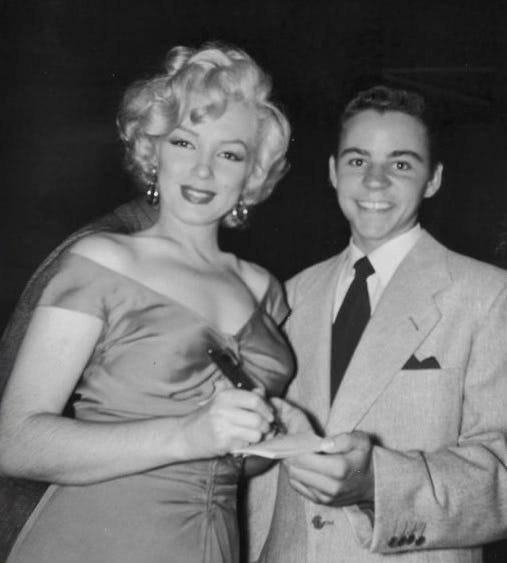
Born in L.A. in 1934, his earliest years interest me almost more than the artist he became because he spent them crashing Hollywood premieres to get autographs and to pose for selfies with movie stars. I’m in love with that mentality, and am working on a longer piece on that topic in which I will refer more to Bachardy’s (and Schreiber’s) experiences, but suffice it to say it’s so infectiously exciting to read Bachardy’s accounts of “getting” pre-superfame Marilyn Monroe, Bette Davis, Joan Crawford and a who’s-who of who-was in Hollywood in the ‘40s and ‘50s with help from his big brother.
Bizarrely, within months of his being a fanboy who was probably a bit of a lovable pest to these famous faces, he was dining with many of them. That’s because, at around 18, he met and fell in love with the artist Christopher Isherwood, who was 30 years his senior. Theirs was an unbreakable bond that virtually no one predicted would last — and last it did, and last it has.
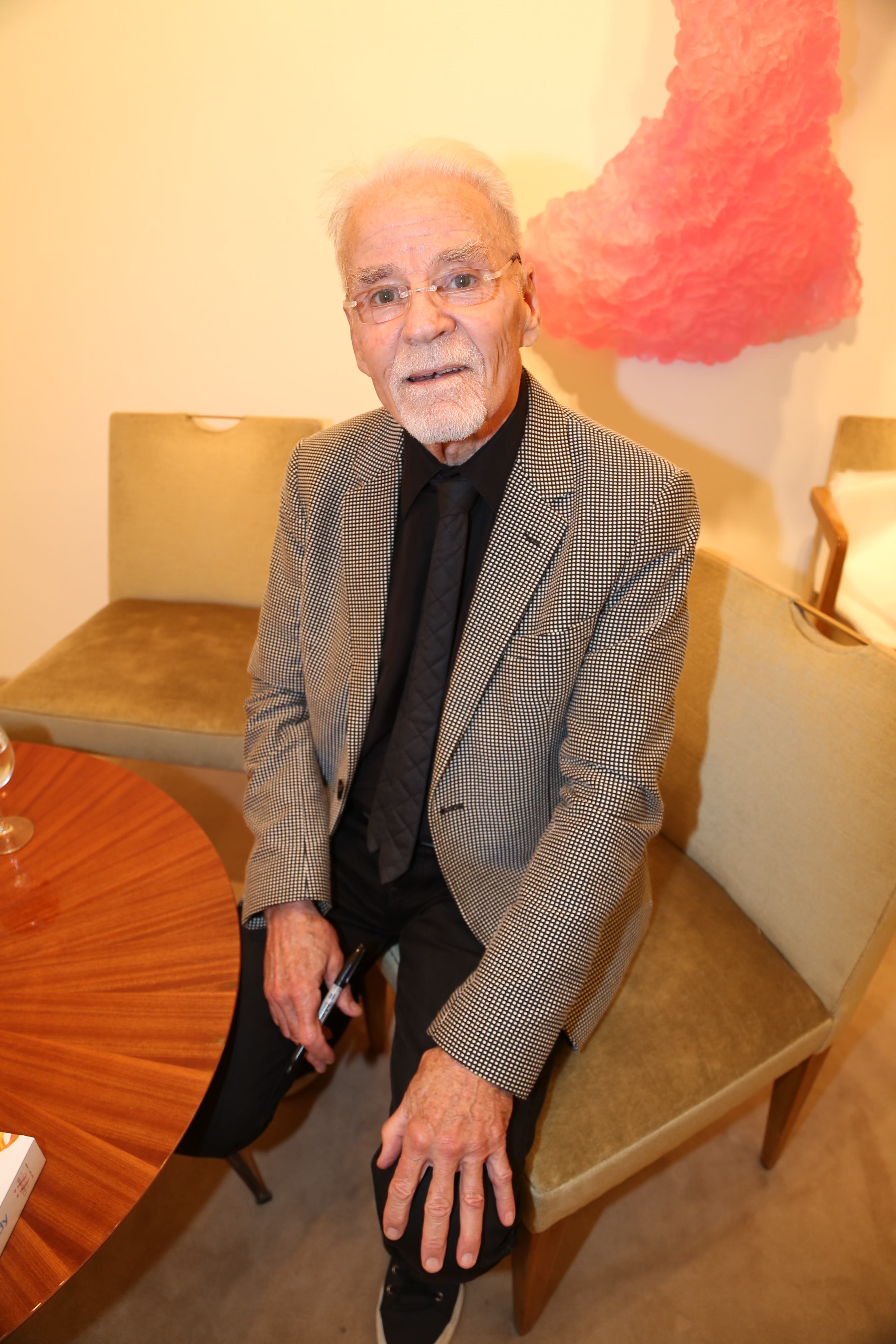
To this day, in this book, Bachardy is still keeping his partner’s legacy alive, even as he speaks proudly of his own accomplishments.
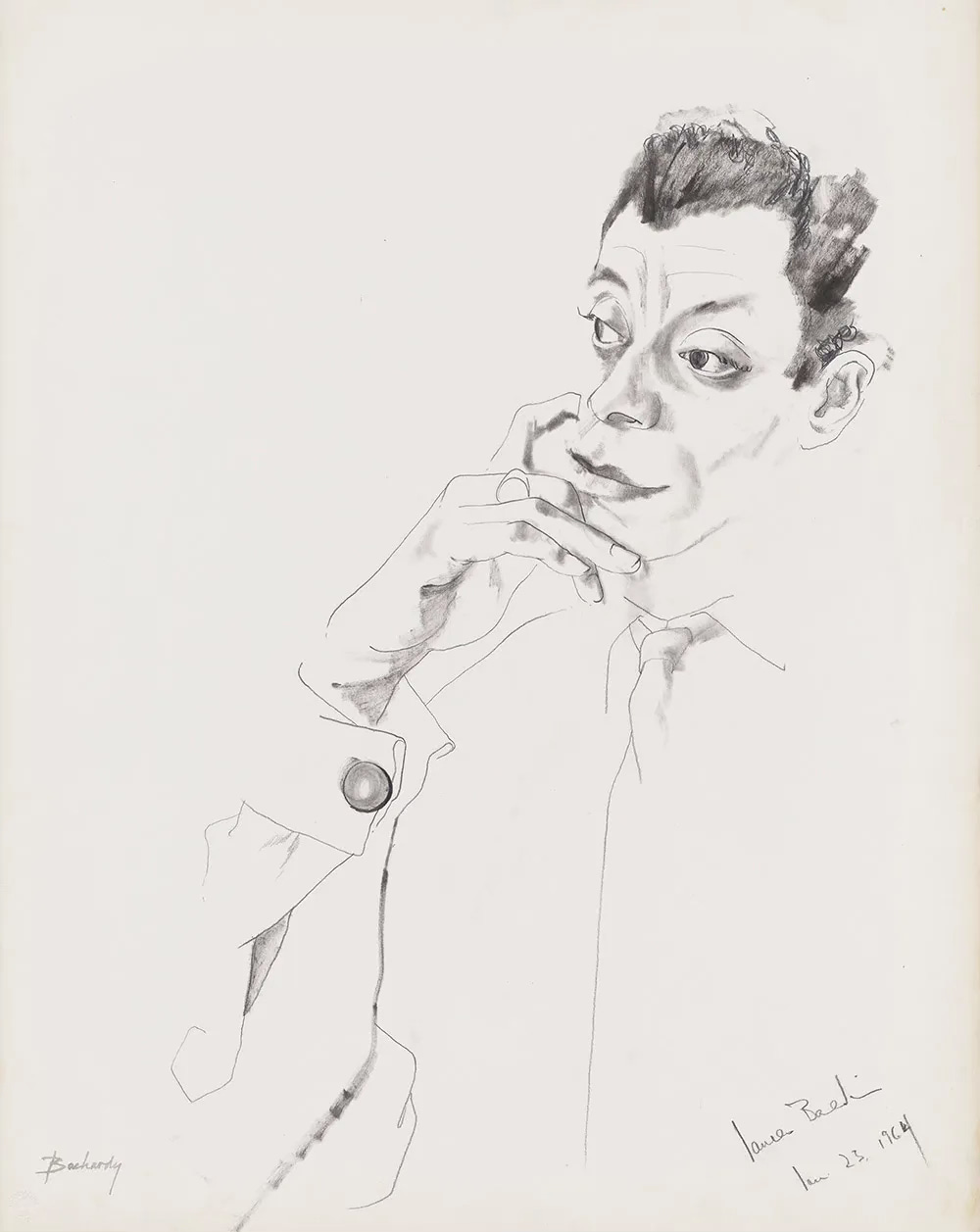
The way Bachardy came into his own and avoided settling into seeming like a kept boy is he developed his skills as an artist, drawing many of Isherwood’s famous friends. Rather than creating fawning likenesses, Bachardy’s images drip sadness, rendering glamour in an undeniably human, often vulnerable way.
One of the gems of this books is getting to read Bachardy’s thoughts on how he developed his vision as an artist. He was just a teen when he was introduced to Carl Van Vechtern, whose photographs of Isherwood he immediately determined to be lacking. But on the same trip, he was introduced to Lincoln Kirstein’s (he really did know everyone) collection of Paul Cadmus’s Seven Deadly Sins. He says;
“I was 19 when I first saw them, and I’d never heard of Paul Cadmus. I didn’t know anything about other artists. But his work was so of interest to me because he was such a good draftsman … He must have been one of the last draftsmen, because it doesn’t seem to me like anybody nowadays has that kind of skill … And also, his subject matter: illustrating each of the sins, and finding some grotesque or horrific way of expressing it. For instance, Lust: I just couldn’t stop looking at it.”
He would chalk up that experience, as well as his absorption of the work of Bernard Perlin, George Platt Lynes and George Tooker, as being instrumental in his development as an artist whose works reside in many museums — and this book provides the rare opportunity of “hearing” an artist walk us through the birth of his artistry.
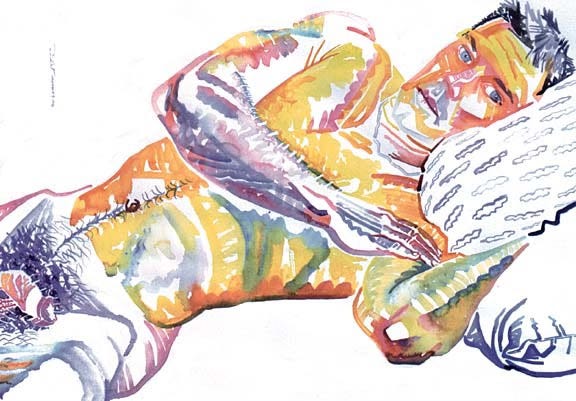
Bachardy’s drawings and paintings are, of course, extremely accomplished, but there is also plenty of gossip in the book, or rather just his unguarded commentary about the vast array of important 20th-century figures he knew, some well.
Because of the interview style of the book, we get to read in Bachardy’s own words how he persuaded Marlene Dietrich to sit for him, and how she responded to the final product (he drew several, she signed two).
Schreiber’s book is a monumental monument to Don Bachardy, who did something almost impossible — he became the lover of an indelible talent known the world over, and he never, ever got lost in that shadow, instead becoming his own impressive creator. Bachardy’s work has cast a long shadow over the work of so many others who have come after him, and Schreiber has documented it beautifully.⚡️
I've read so much about him over the years.