

October 21, 2026
Elsinore arrives at a time in cinematic history when many audiences interested in LGBTQ+ stories are seeking queer joy, and are openly antagonistic toward projects that focus on queer sadness or adversity. When The Boys in the Band is mentioned, it often leads to catfights as intense as those in the movie.
For years, I’ve heard a lot of viewers praising positive portrayals by denigrating other works — “Not every queer movie has to be about being gay, or has to be about someone who takes their own life or dies of AIDS.”
Now that we have a wealth of depictions and stories, it should also be true that not every queer movie has to ignore coming-out issues and the history of the AIDS crisis.
In Elsinore, we have a finely observed film that is a product of the past, when queer characters’ queerness was the issue and non-out actors were “brave” for playing them, when people battling AIDS were martyrs, and of the present, in which our experiences are allowed to have depth and hope.
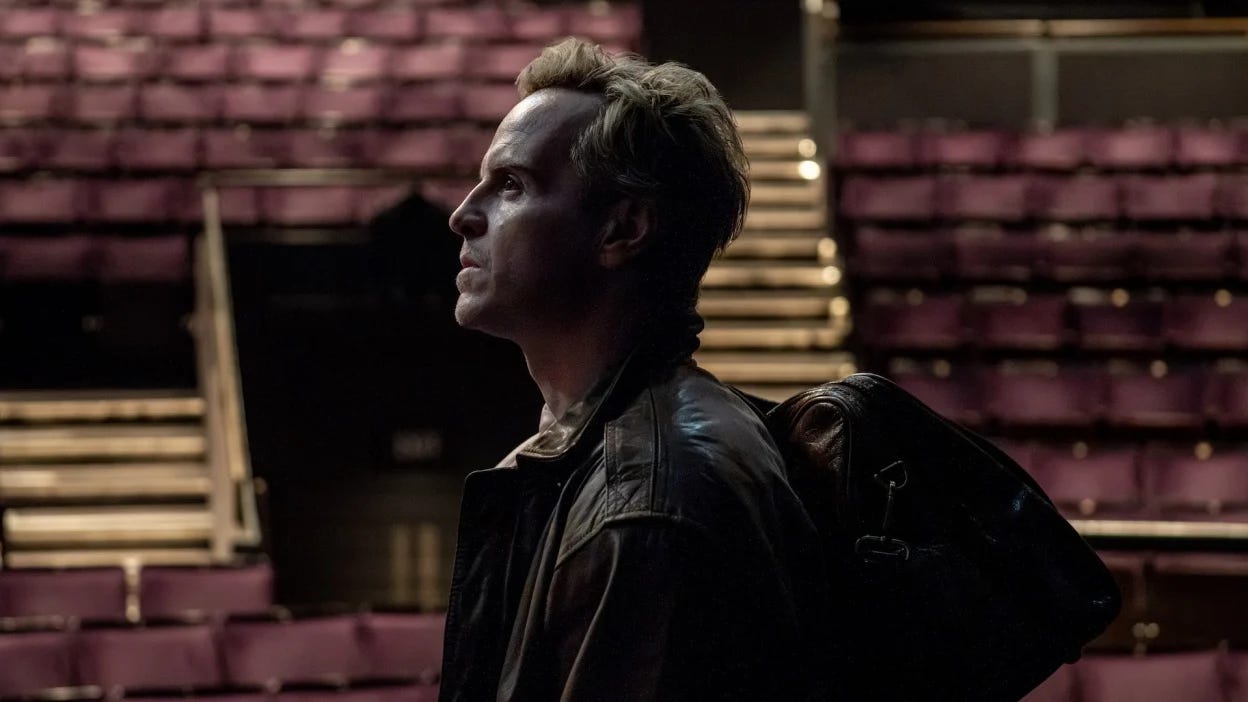
Out actor Andrew Scott plays closeted actor Ian Charleson, the star of Best Picture Oscar winner Chariots of Fire (1981). Set in 1989, the film offers a layered depiction of Charleson while the story concerns itself narrowly with his lifelong desire to play Hamlet at London’s National Theatre and how the opportunity arises just as he is developing AIDS.
The decisions he makes regarding the play and how he chooses to spend whatever time he has left inform his character in a way a broader biopic never could, offering a rich portrait of a dreamer, a stubborn ego, a man fearful of the truth and yet fearless in his ambition.
Scott, one of our finest actors, gives a masterfully empathetic performance that conjures Charleson’s charm. The terrible news the actor has been given is always etched on Scott’s face, making the film as much suspenseful as anything else — will Charleson live long enough to achieve his dream, or will the exertion required to play this part kill him first?
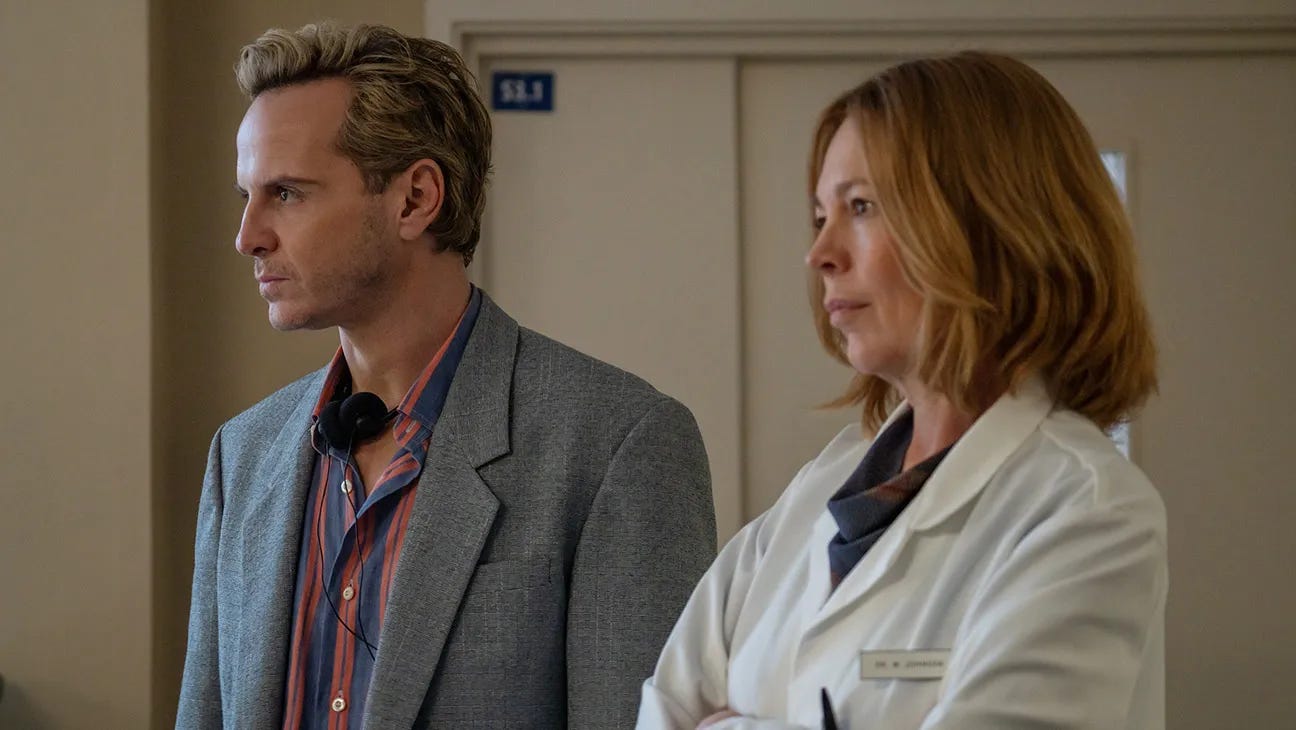
Along the way, Charleson’s support system is personified by some of the best supporting players of the year, including Monica Dolan, a riot as chain-smoking National Theatre front-desk person Linda, and a transcendent Olivia Colman as the real-life AIDS doctor who prolongs his life and whose own story is worthy of a biopic.
Onetime pop star Billie Piper continues to impress as Charleson’s casting director bestie. She flits in and out of his orbit frothily, cheering him up and making him feel human at a time when so many would have given him a sad face and a hand on the shoulder, the last type of support he seemed to need. Their chemistry as friends makes the impending loss all the more heart-breaking.
Speaking of which, while this film doesn’t shy away from inspirational, even triumphant, moments, Georgie Glen and Peter Mullan as Charleson’s parents deserve special mention for making their realization of his diagnosis as moving as Therese Frare’s image of David Kirby and his family.
Writer Stephen Beresford (Pride) has crafted an unforgettable portrait of a queer hero, and has done so while sensitively examining his flaws, using the device of his antagonistic relationship with director Derek Jarman (David Dawson), who in real life couldn’t forgive Charleson for never coming out as having AIDS.
Scott, who also produced, gives the performance of his career. His empathy for and understanding of Charleson is a wonderful thing to watch, feeling like a passing of the baton.
Elsinore is a scrupulously intelligent, exuberantly emotional examination of death using the most famous play about death in history, a film about queer joy and queer pain that inspires queer pride.⚡️
Reviewed at NewFest 38.